

My ceramics
From a Raw Ball of Clay to a Finished Vessel – How My Ceramics Are Made
Every mug, bowl, or vase that finds its way into your hands carries a story written in clay, hands, and fire. The entire process unfolds in my home studio, where everyday living space blends seamlessly with artistic craftsmanship.
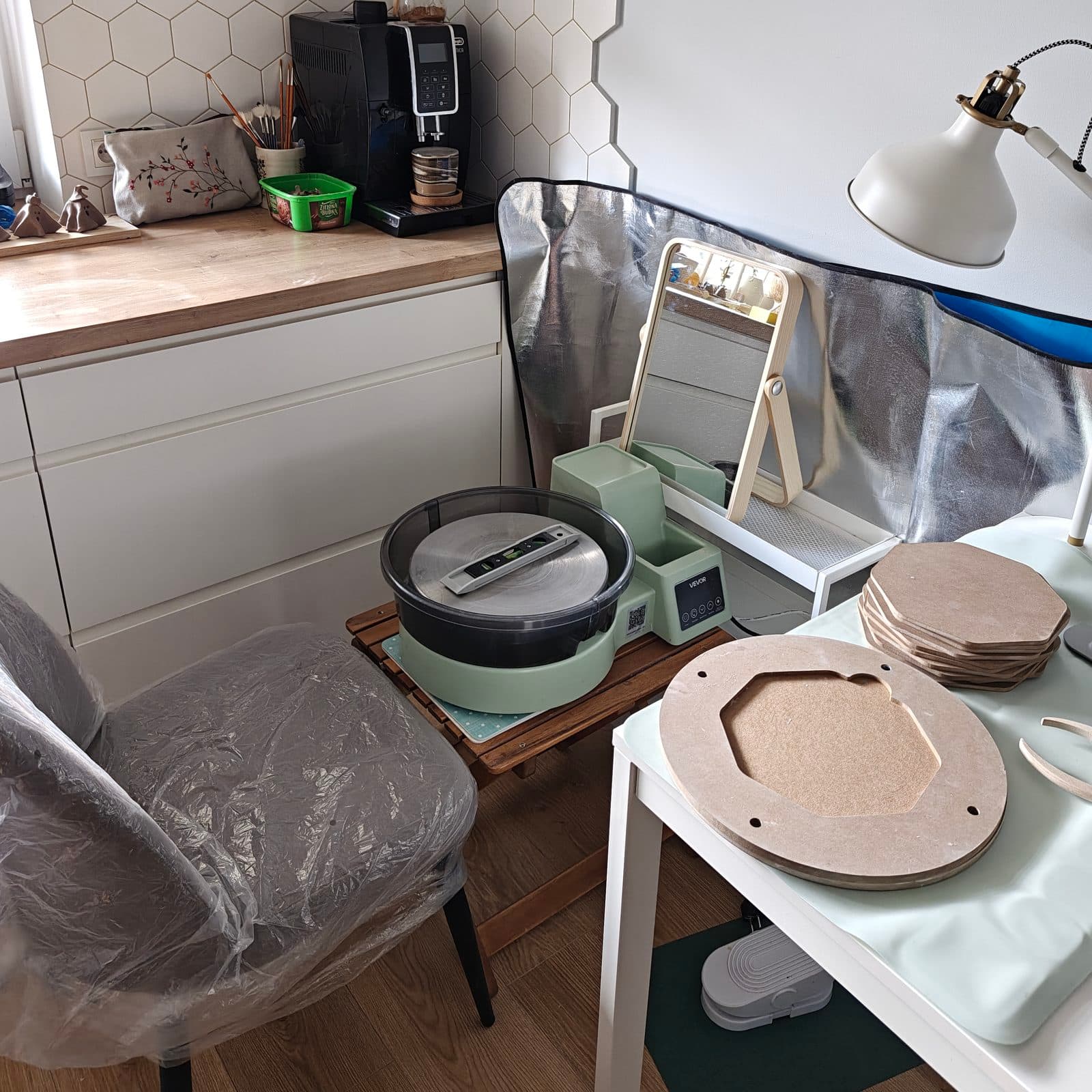
Here is the journey each piece takes before it makes it to your table:
1. Preparation
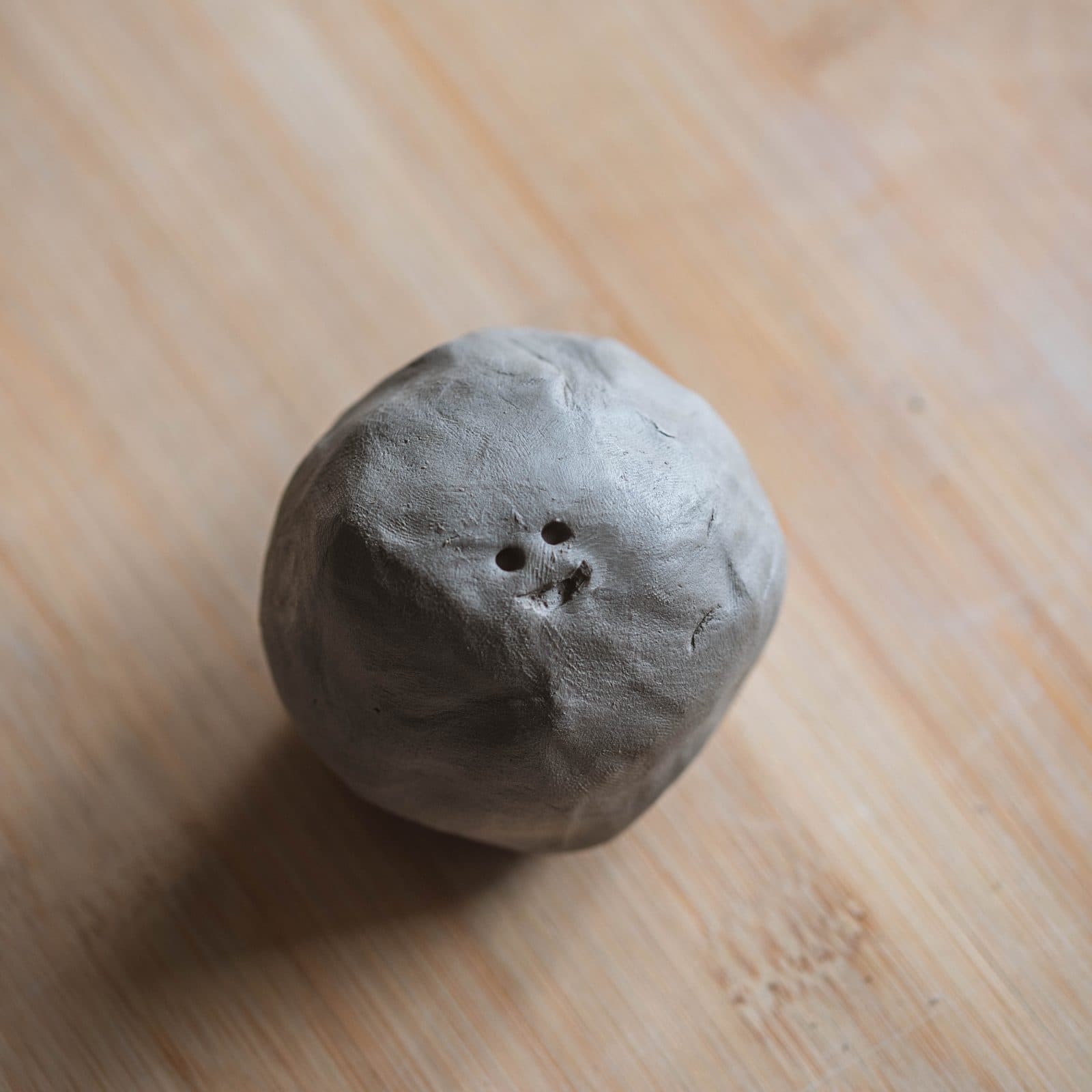
It all begins with a cool, damp ball of clay. I weigh it and wedge it thoroughly to remove any air bubbles. This is a moment of deep focus, where the material gains its plasticity, and my mind is already envisioning the shape it will soon become.
2. Wheel Throwing
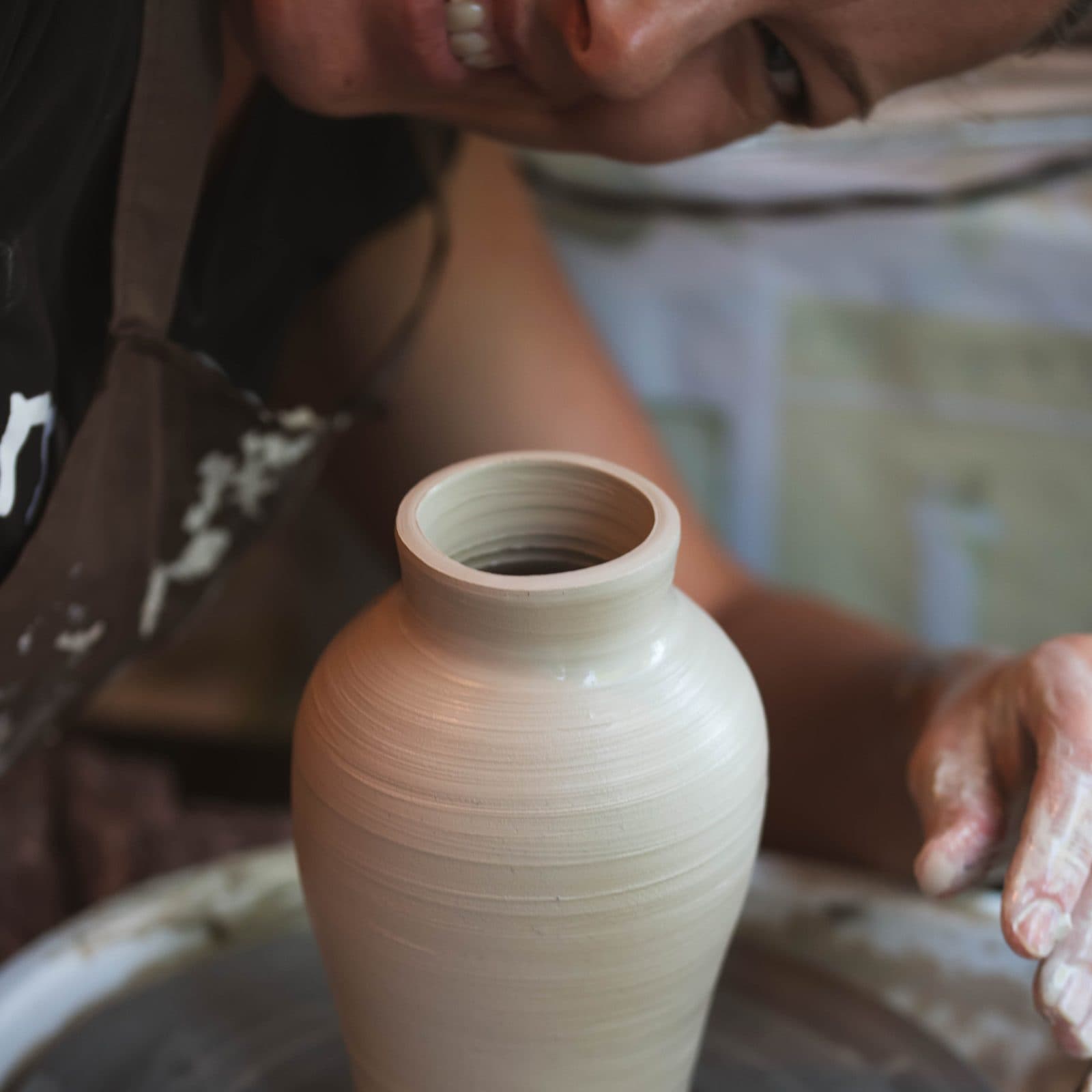
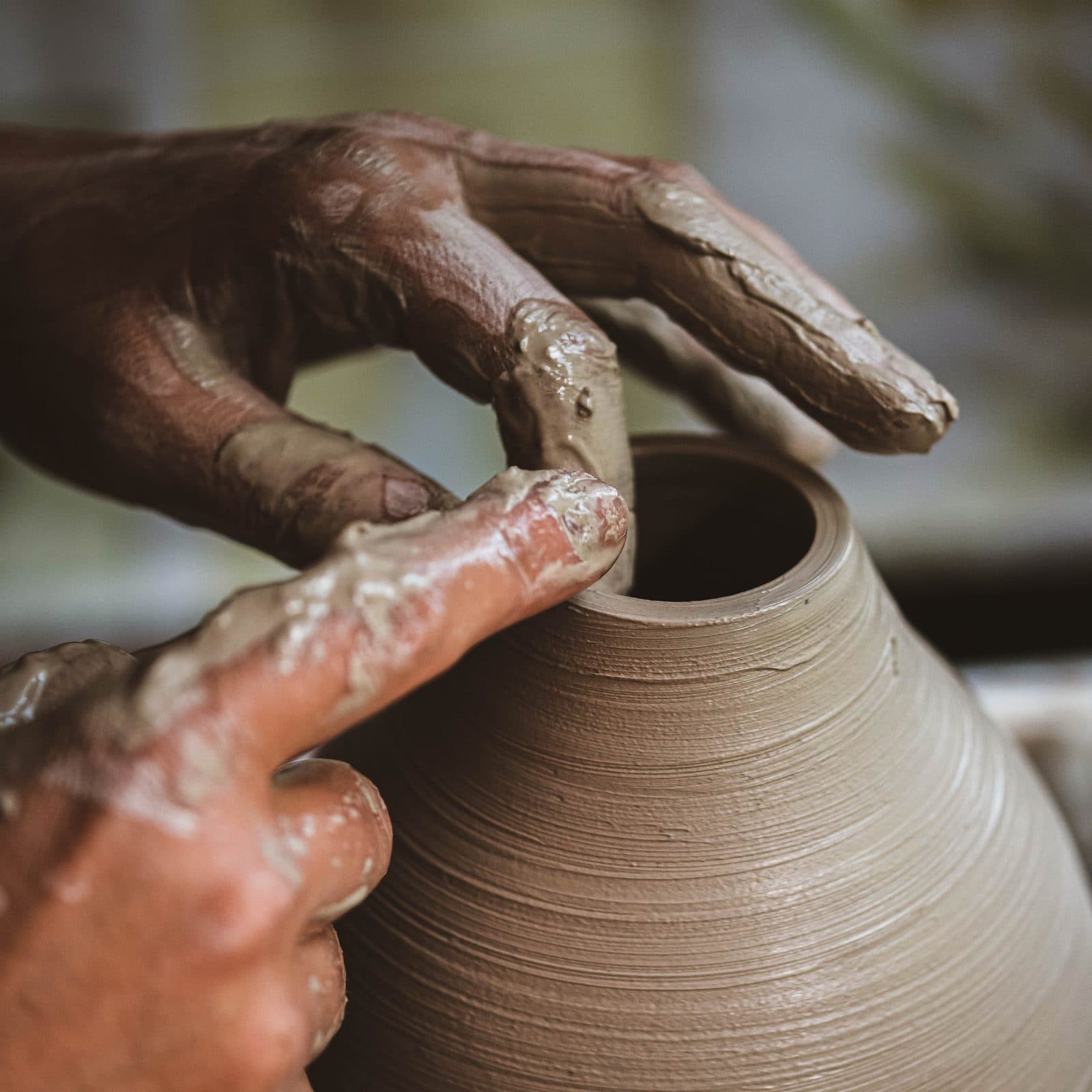
To ensure the walls of the vessel have an even thickness, centering the clay is essential—meaning it must sit perfectly in the very middle of the wheel (learning to center is no easy feat and takes a beginner ceramicist a lot of time). Only then do my thumbs open up its core, and my fingers pull the walls upward, giving the formless mass its very first shape.
3. Trimming
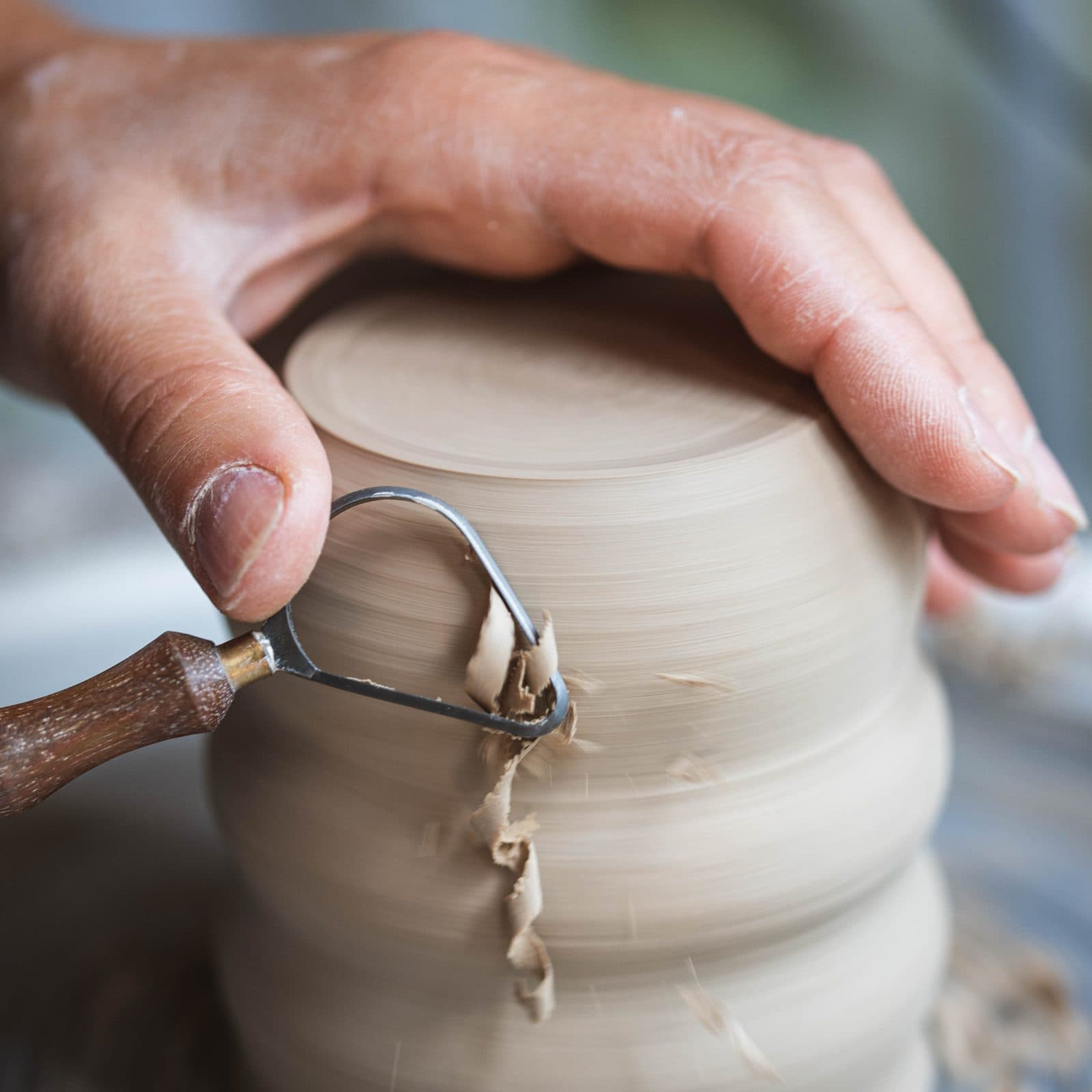
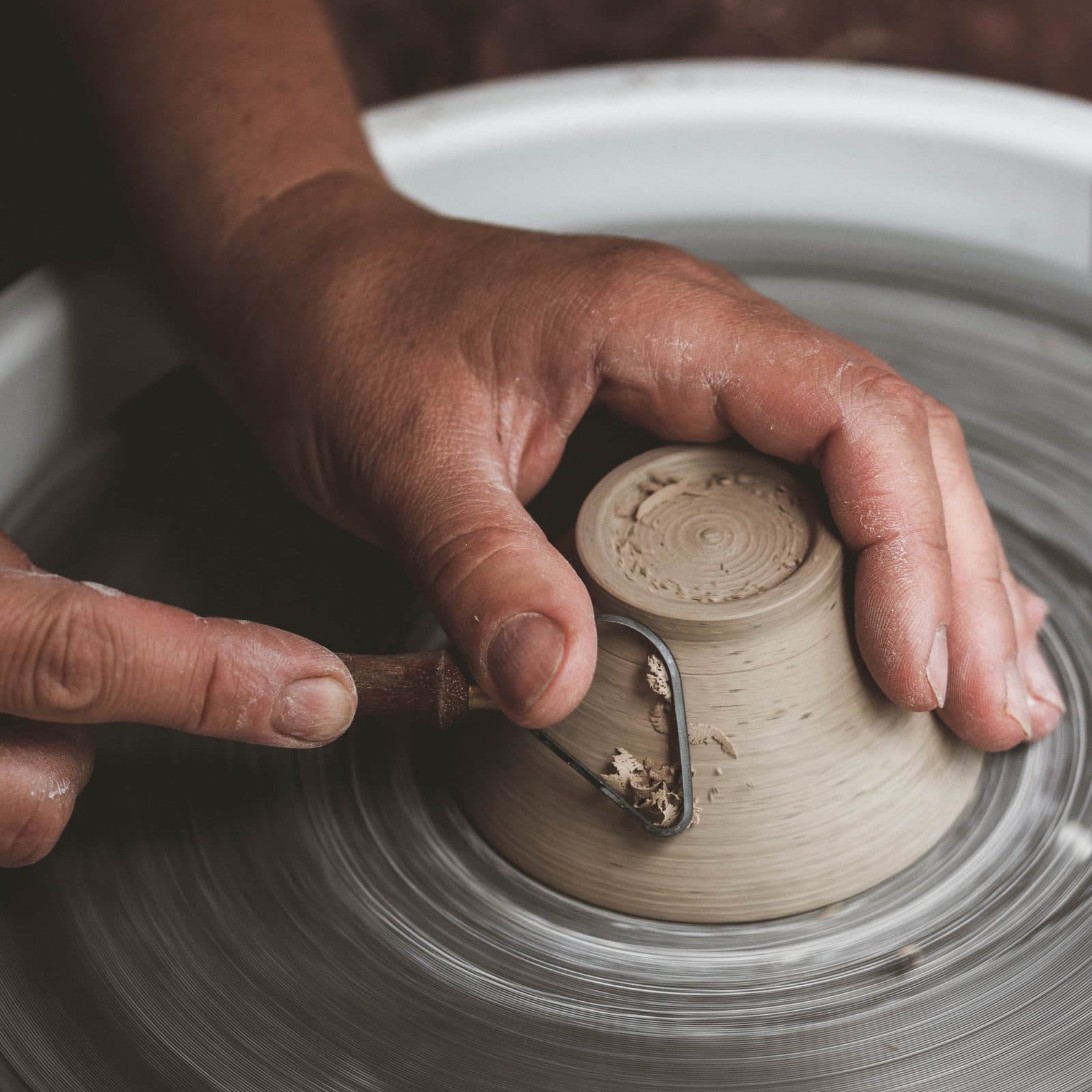
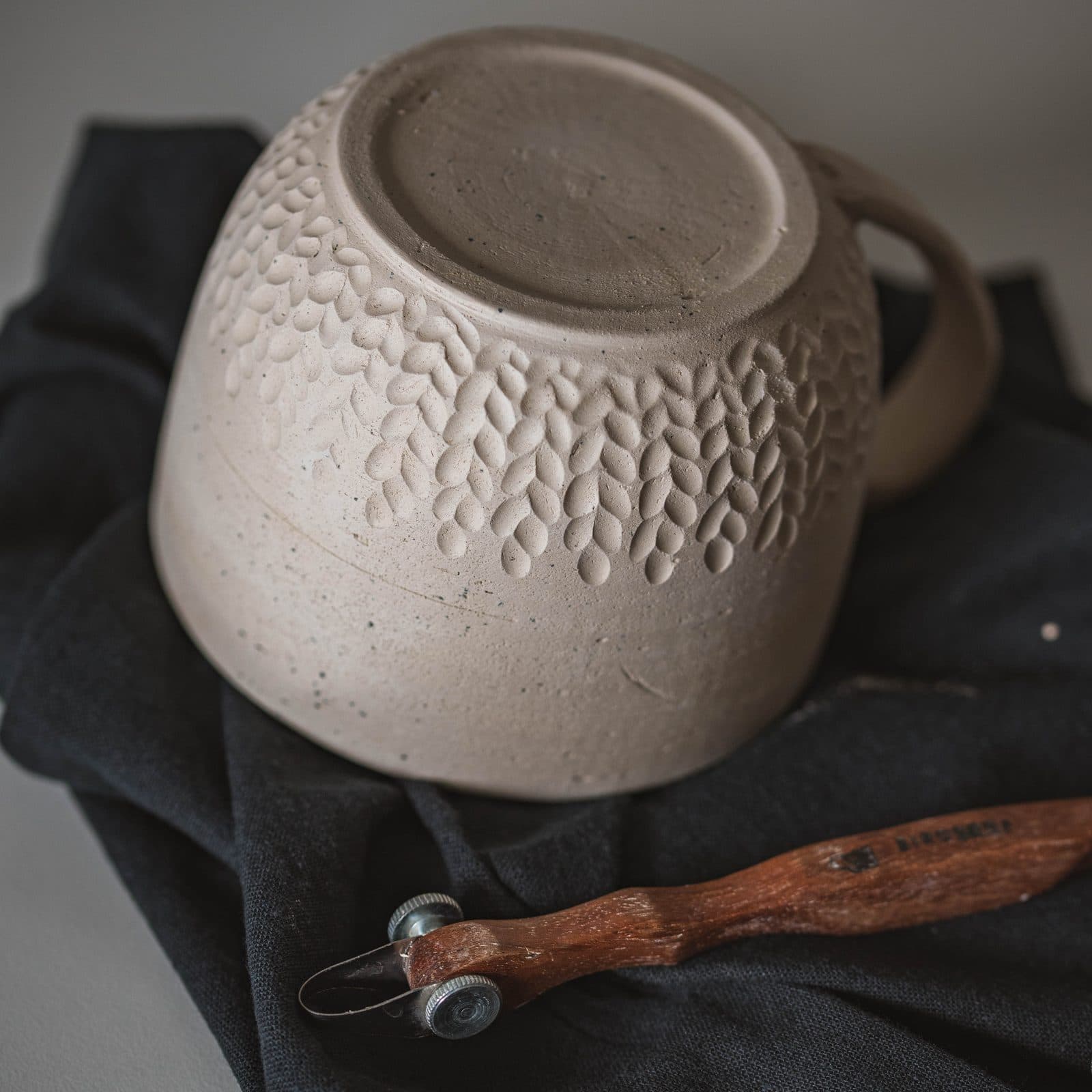
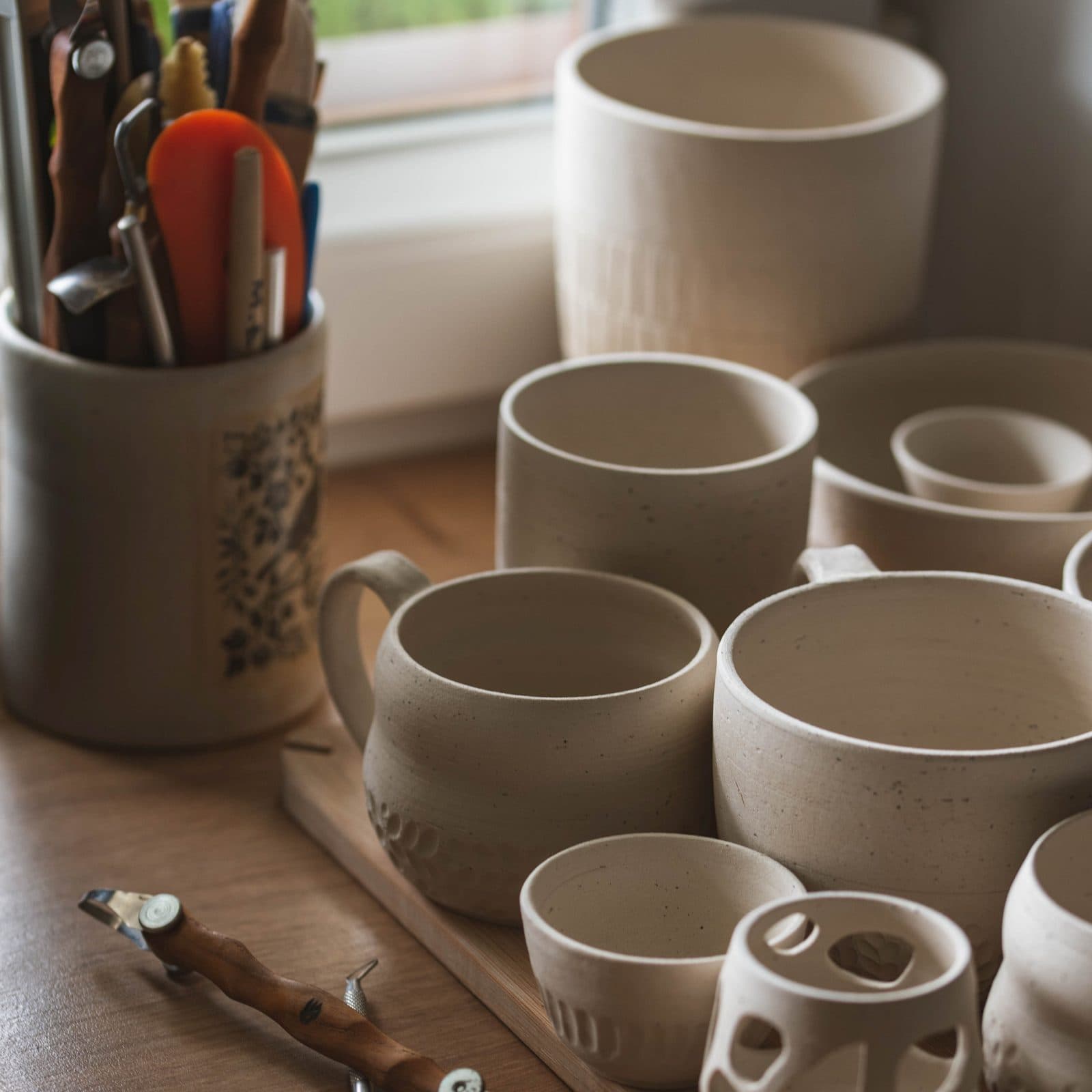
Once the piece dries to what we call "leather hard," it goes back onto the wheel. Using metal tools, I trim away the excess clay and shape the foot ring—this is where the real magic happens, as it takes on its final form. Next, it's time to attach handles to the mugs and move on to my absolute favorite part of the whole process: carving the clay. When the pot is ready, it has to dry very slowly to avoid cracking, which can take up to a few days.
4. Bisque Firing
The fragile, bone-dry vessels are placed into the kiln for their first firing at around 900–1000°C (1650–1830°F). After a dozen or so hours, the clay permanently changes its structure—transforming into hard, porous earthenware.
5. The Alchemy of Glazing
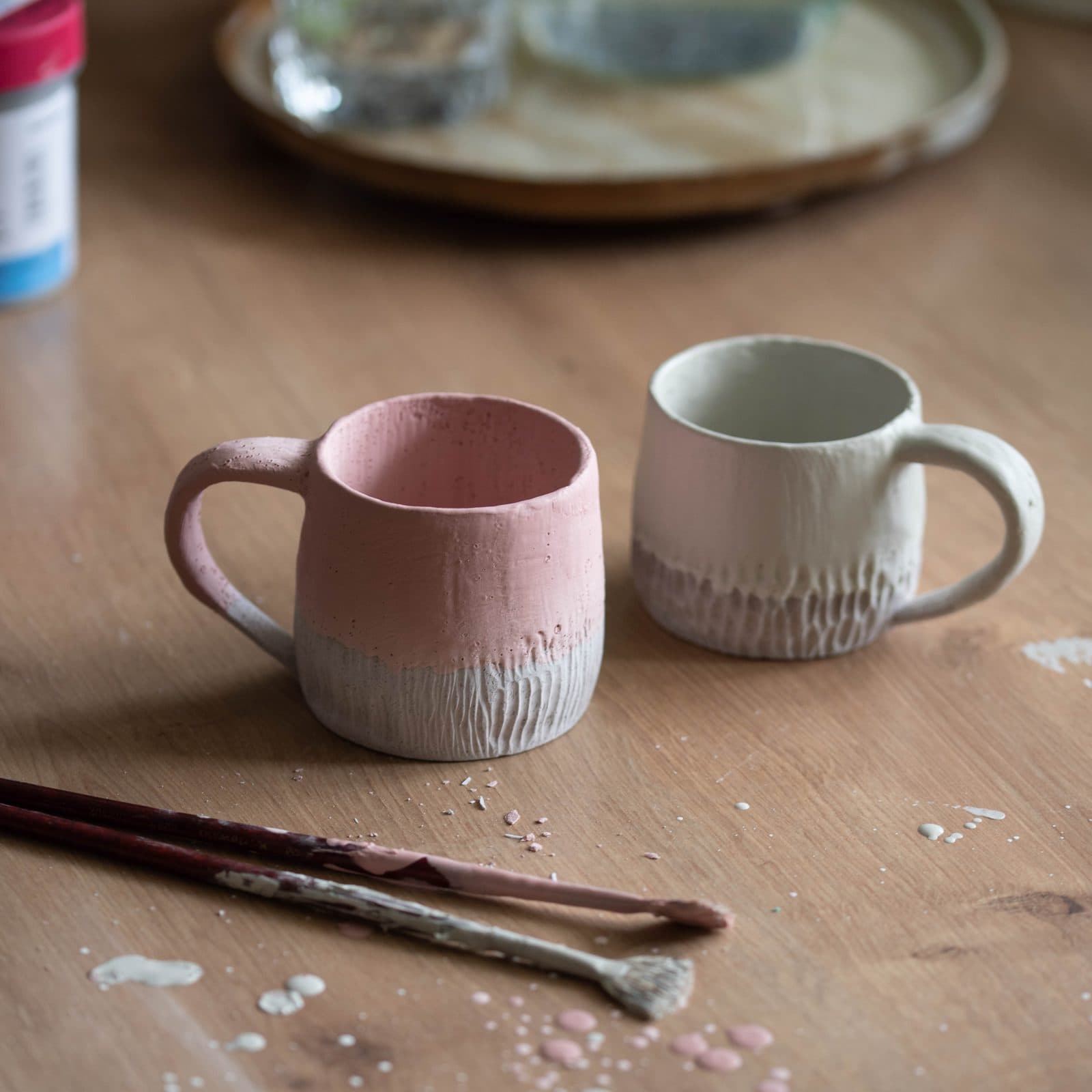
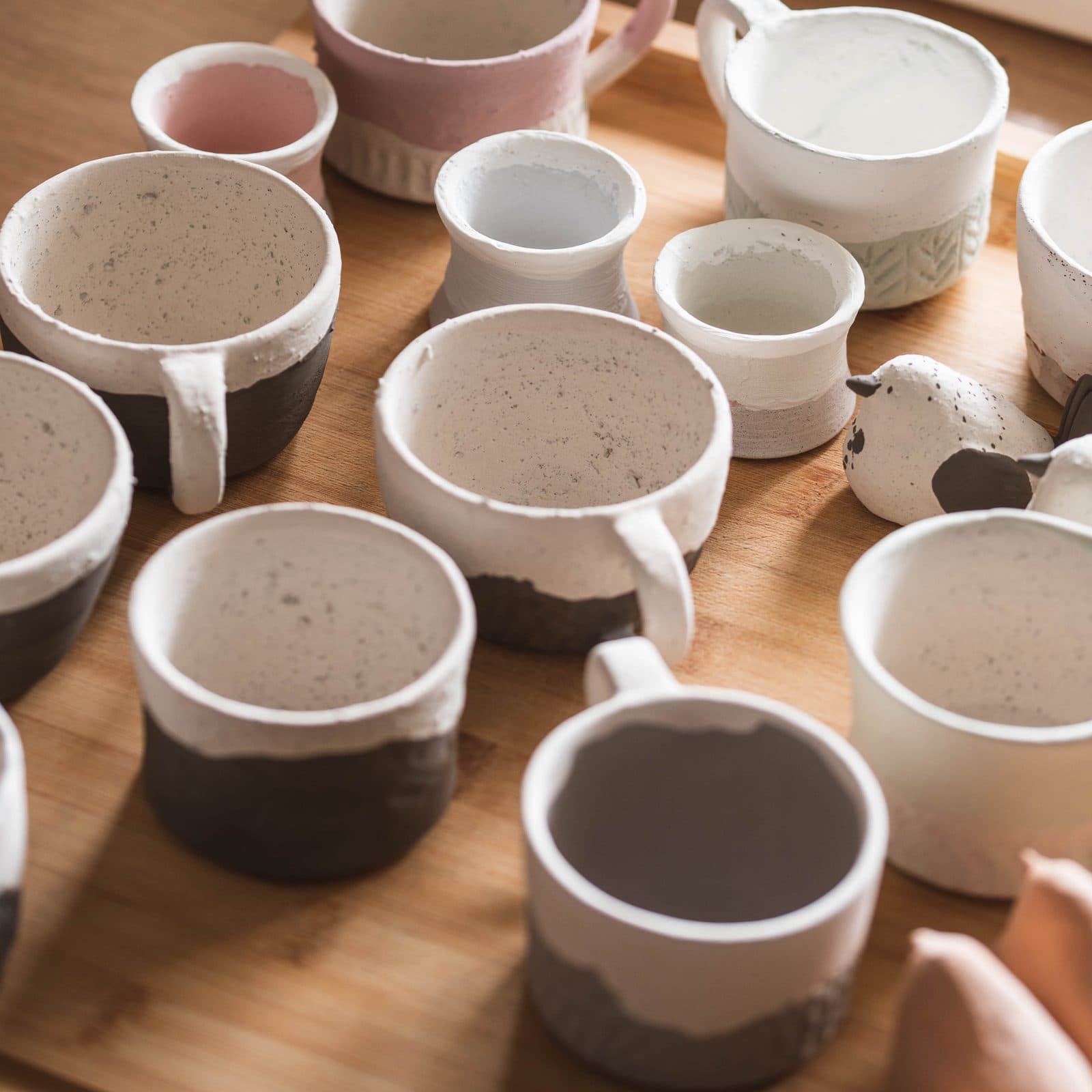
This is where the process of coating the clay with glazes takes place. It requires a massive amount of imagination, because unfired glazes are completely matte and often look entirely different from their post-firing colors. As I apply a gray liquid, I have to visualize the future ocean blue or forest green in my mind's eye—and even then, the final result surprises me deeply every single time.
6. The Second Firing, or the Ultimate Magic
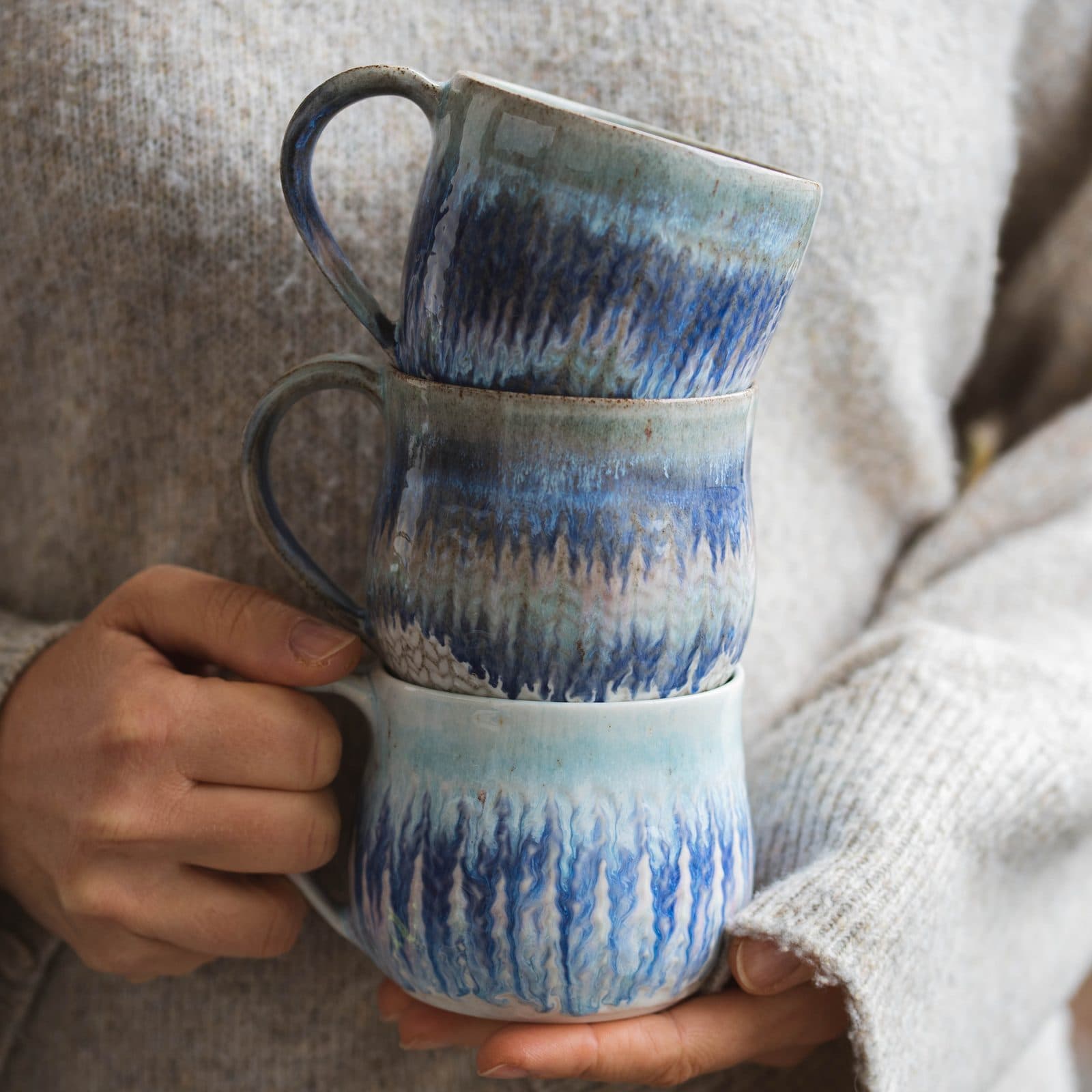
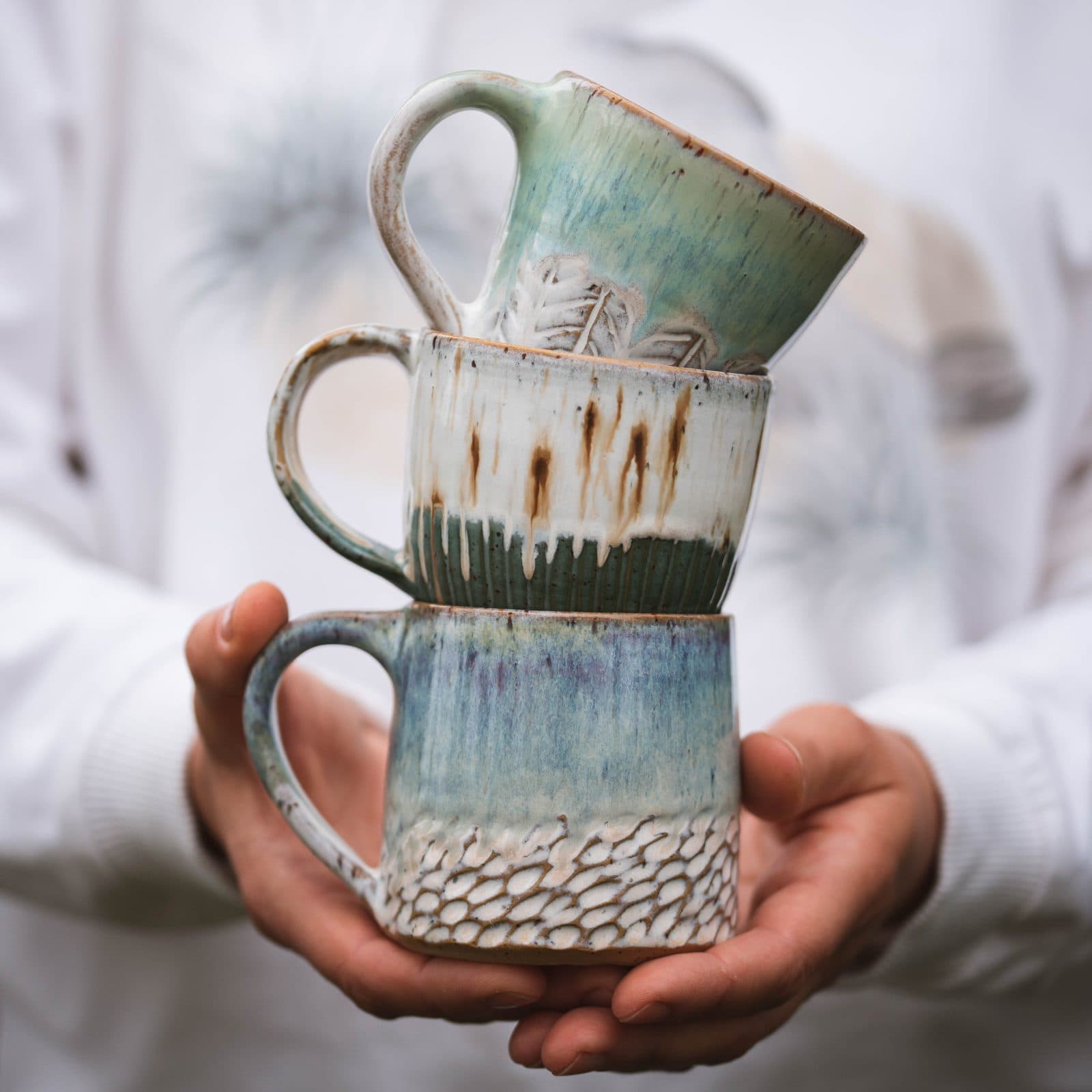
The vessels return to the kiln for another firing, usually at temperatures above 1200°C (2190°F). In this intense heat, the glaze melts into a glossy, glassy surface, and the clay vitrifies into durable stoneware. Opening the kiln after a full day of cooling down is always a moment of pure magic.
A Piece of My Everyday Life in Your Home
Every thumbprint, gentle curve, or unique glaze drip is proof that these objects once lived in my hands. By creating at home, I pour a piece of my everyday life and a whole lot of heart into each ceramic piece.
I hope you find something here that brings joy to you and your loved ones, and adds warmth to your home and everyday rituals.
Join Me on Instagram!
If you'd like a peek into my daily studio routine, behind-the-scenes footage, and moments from the making process, come follow my profile: @magda_ceramics.
See you there! Magda